Building a Rural Chiropractic Practice and Mentoring Others to Do the Same
-
-
Last updated: June 2, 2026
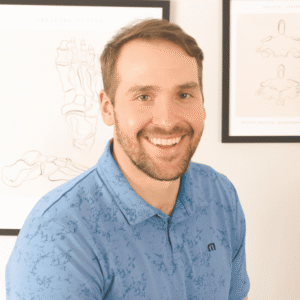 Northwestern Health Sciences University graduate Jake DeSantis, DC ‘18 took over a retiring chiropractor’s rural practice and built a thriving interdisciplinary clinic. Learn more about building a rural chiropractic practice, his approach to care, and how he’s mentoring others to build fulfilling careers in their communities.
What would Dr. Jake DeSantis tell new grads who want to open or buy a practice? “Embrace the grind. Good things are not easy.” When he took over a practice in his hometown (Rice Lake, Wisconsin), this meant waking up at 4:30 am so he could see patients with union jobs at 5 am before they went to work. “You have to know your demographic. They’re not taking time off work, so you have to make time for them.”
It paid off. Since then, he’s grown Wild Rivers Chiropractic into a thriving interdisciplinary practice. He purchased a building, hired two chiropractic associates, and brought massage therapists and soon a nurse practitioner and naturopath into the space.
Meeting the Needs of His Rural Community with Acute Care
Dr. DeSantis returned home to Rice Lake in his final trimesters of chiropractic school at NWHSU to intern with Dr. Hover, who had been practicing for over thirty years. When he graduated, he worked for Dr. Hover for a few months while he got credentialed with the insurance networks. Then Dr. Hover retired, and Dr. DeSantis took over the practice and made it his own.
As a primarily insurance-based practice, Wild Rivers focuses on acute care, and Dr. DeSantis notes that his patient population appreciates their approach. Beyond adjustments, Dr. DeSantis and his associates integrate shockwave therapy, rehab, dry needling, and other modalities into their treatments.
I think ten years ago a lot of people weren’t super comfortable with a younger doc because they’re not experienced,” he explained. “But now I would say a bulk of our patients are like ‘we want the newer methods, we want the evidence-based care.’ They get better faster, and everybody wants to be better faster, right?”
Who are his patients? “It’s all over the board. That’s the cool thing about being in a small town. We see babies in their first week and I saw someone yesterday who was 98. We see a lot of Medicare, but also a lot of high school athletes. It keeps things interesting.”
Another thing he loves about small town practice is that you don’t have to do any marketing. “You just be out in the community, be a good person and people talk.”
Embracing His Role as a Mentor
Dr. DeSantis started hosting high school students through the school’s career-shadowing program during his first year in practice. Students shadow him for a couple hours a day over the course of a month, while also shadowing other healthcare professionals. “I wish I had that when I was younger,” he shared. “They get a really good gauge of ‘is chiropractic for me?’”
Dr. DeSantis never considered being a preceptor for chiropractic interns. “We’re in one of the bigger cities in Northwest Wisconsin, but relative to Minneapolis this is a blip. So why would anybody want to come and do it here?” However, he wasn’t the only NWHSU student interested in returning home to practice.
Kodye Tangwall, DC ‘24, also from the Rice Lake area, approached him about doing her community based internship (CBI) with him, and though he hadn’t considered it before, he realized it could be a great thing:
Older docs in the area are nearing retirement age, and if new docs don’t come, it’s going to be an issue. A lot of chiros view other chiros as competition, but around here there are a lot of blue-collar people with aches and pains and all the chiros are busy.”
Dr. Tangwall stayed on as an associate after graduating. Later, Micci Booth, DC ‘25 took the same path. Dr. DeSantis encourages them to develop their own style and approach to care. “I don’t want to create a cookie-cutter version of myself,” he explained. “I want you to do things the way you see fit.”
While learning from a veteran chiropractor with 30 years of experience has major benefits, Dr. DeSantis recognizes that being closer in age to interns and associates can also be a benefit. He’s close enough to where they are to still understand it. The environment he started a practice in is closer to what they would encounter now. And his approach — evidence-based, technique-flexible, not rooted in a single school of thought — gave them room to develop as clinicians rather than become disciples.
Advice for Starting and Running a Practice
Dr. DeSantis’ anti-cookie-cutter philosophy also applies to running a practice. He sees new doctors pay business coaches and use scripts to grow a clinic, but that is not what he advises. “Sometimes learning, failing, figuring it out for yourself is the best way to do it,” he explained.
People don’t like scripts. We don’t do scripts. Everybody is different. Everybody’s treatment plan is different. Just putting the patient first is going to grow your practice so much more than scripts and a bunch of marketing.”
Another key piece of advice? Know what you’re signing. Before you enter an associate contract, agree to a practice purchase, or take on any business relationship, understand the terms. And just as importantly, understand your own worth. “Having some value of your own self-worth and what you bring to the table is very, very important,” he says, “especially as a younger doc.”
Finally, start imagining your dream practice early. Dr. DeSantis did a project while in chiropractic school at NWHSU that outlined what he wanted: to own his own building, run his own practice, and create an interdisciplinary space. “I didn’t really think it would come to fruition,” he admitted. But when the opportunity to buy a building arose about three years ago, he jumped.
Now, his goal is to create a space where everyone is benefiting. The non-chiropractors pay a flat rate for rent, and the chiropractors chose to be associates, though he says he’s flexible for that to change in the future. “My goal is not to work them into the ground and make a bunch of money off them.” He explained that starting as an associate can be easier, because you have guaranteed income. “Then as you grown your patient base, there’s a little more upside with having your own business. So there’s a lot of flexibility with that.”
Is a Chiropractic Career for You?
Dr. DeSantis’ story of buying a rural practice isn’t a template. It’s one version of what a chiropractic career can look like. Other alumni start their careers as associates, start their own practices, or join major health care organizations.
NWHSU’s curriculum — evidence-based, with business coursework woven through every trimester — gave him the foundation to follow his own unique path.
If that sounds like the kind of career you’re trying to build, the first step is the same one he took: get trained somewhere that prepares you to actually run a practice, and confidently treat patients. At NWHSU, those two things aren’t treated as separate.
To learn more about Northwestern Health Sciences University’s Doctor of Chiropractic program, speak with an admissions counselor or explore the alumni stories that show where an NWHSU education can take you.